
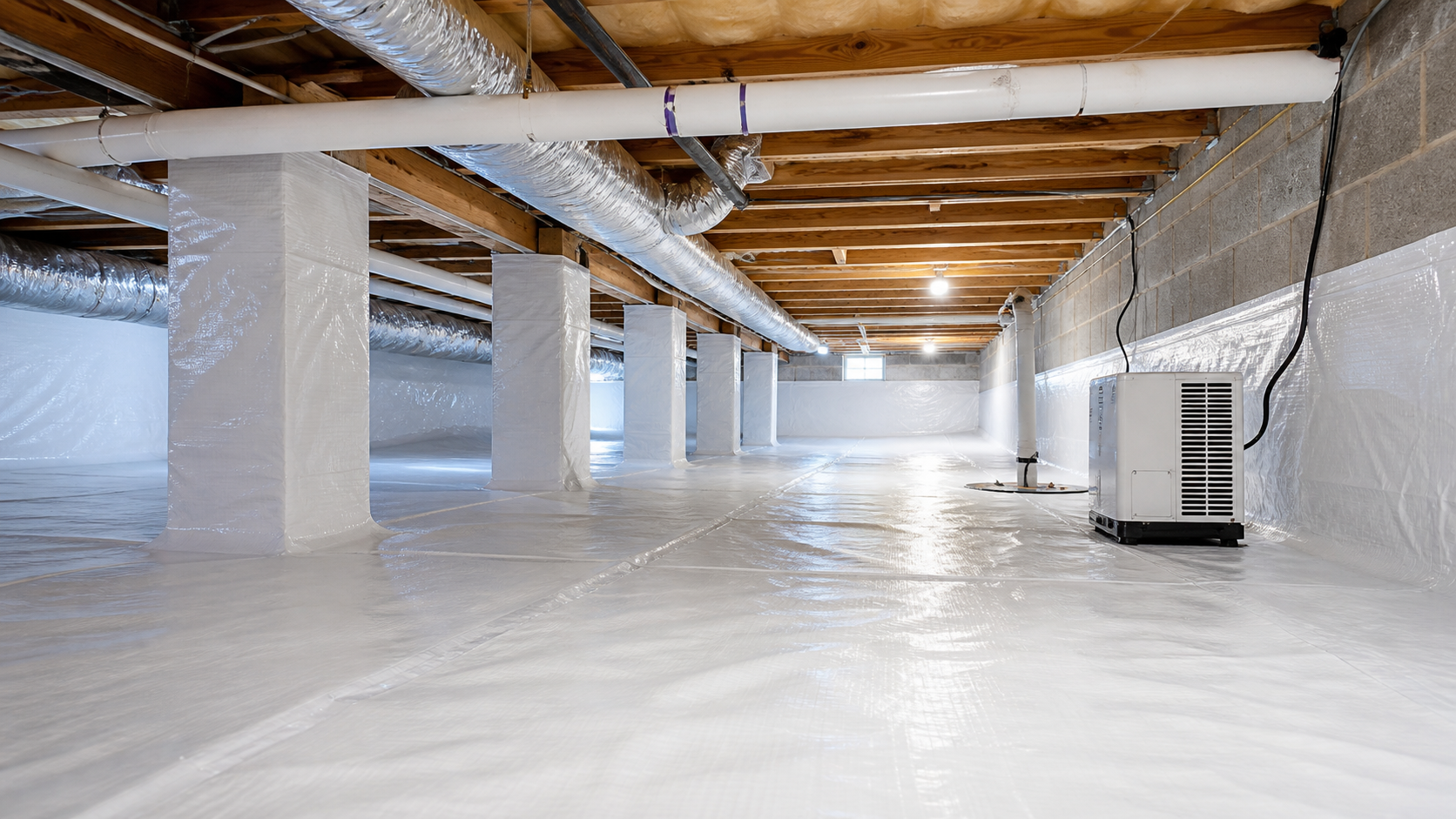
Crawl spaces are easy to ignore because they are out of sight, but moisture below the floor can still affect the living space. Damp soil, exposed vents, standing water, and poor vapor control can allow humidity, odors, and airborne particles to move upward into the home.
Over time, that moisture can contribute to uncomfortable rooms, musty smells, damaged insulation, concerns around wood framing, and the possibility of poor indoor air quality. Because air from the crawl space can influence the rooms above it, moisture control is often part of protecting the whole home, not just the area under the floor.
Common crawl space moisture clues
- Musty odors inside the home
- High indoor humidity or uneven comfort
- Stale air or allergy-like irritation that seems worse indoors
- Sagging or wet insulation below the floor
- Visible ground moisture, puddling, or staining
- Soft, stained, or deteriorating wood members
What a complete plan may include
A crawl space solution may include drainage corrections, vapor barrier installation, sealing, dehumidification, and repairs to damaged materials. Beacon looks at the whole moisture path so the final plan supports the crawl space and the rooms above it.